
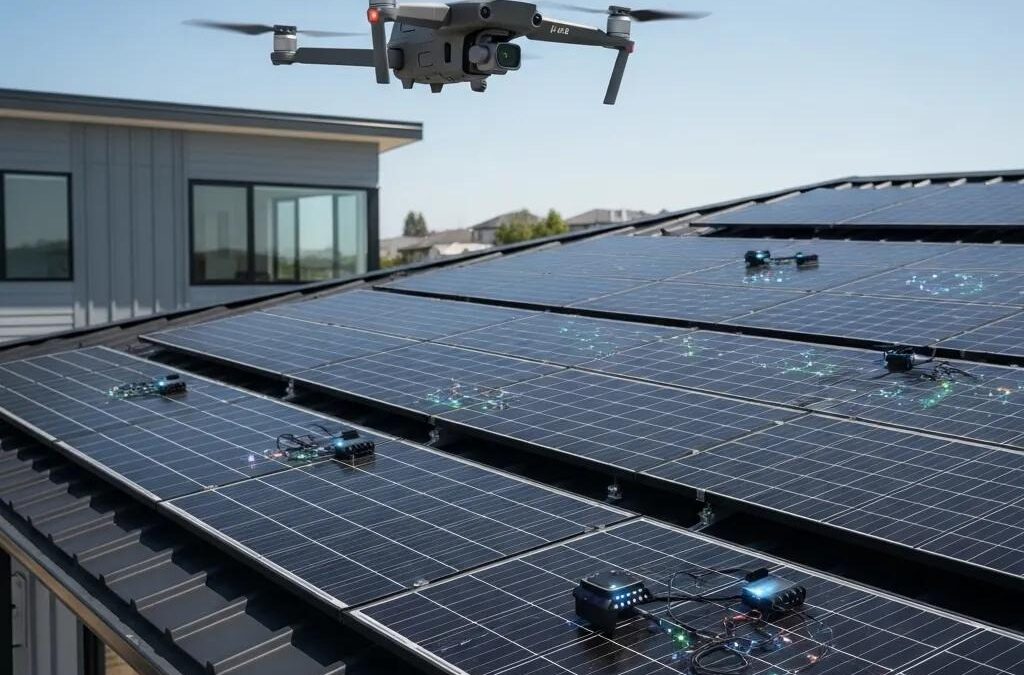
Looking to cut energy bills and shrink your environmental footprint? The roofing sector is moving quickly as new technologies arrive that boost efficiency and sustainability. Think smart roofing systems that respond in real time, solar roofing that offsets power use, and automation that makes installation and maintenance faster and safer. These advances save money and support a greener future.
Read on to see how these technologies work, the benefits they deliver, and what they mean for homeowners, businesses and contractors. With a clearer view of the options, you can choose solutions that match your sustainability goals and improve building performance.
What Are the Key Innovations in Roofing Technology Today?
Smart roofing, solar integration and automation are reshaping the industry. They change how roofs are designed, installed and maintained while delivering measurable gains in energy efficiency and operational sustainability.
How Do Smart Roofing Systems Enhance Energy Efficiency?
Smart roofing systems combine sensors and automation to monitor temperature, humidity and energy use. By tuning ventilation and insulation from live data, they cut consumption and lower utility bills. For property owners, that adds comfort and a clearer return on investment.
Recent research also shows that AI and intelligent tools are simplifying complex specifications and speeding up decision-making for contractors and owners.
AI & Smart Systems for Next-Gen Commercial Roofing
Commercial roofing is experiencing significant change driven by data analytics, artificial intelligence (AI) and decision-support tools. FM Approvals developed RoofNav to enable code-compliant design of class 1–90 roofing systems; the Smart Assembly Recommender (SAR) is an AI-enabled extension of RoofNav that simplifies assembly selection. SAR accelerates creation of code-compliant designs and contract bids by delivering intelligent recommendations within standard industry workflows.
NEXT-GEN ROOFING SOLUTIONS: SMART ASSEMBLY RECOMMENDER FOR ROOFNAV IN COMMERCIAL PROJECTS, SR Sangannagari, 2025
What Role Do Solar Roofing Advancements Play in Sustainable Design?
Solar roofing turns sunlight into electricity, reducing reliance on fossil fuels and shrinking a building’s carbon footprint. In many cases, solar systems can meet a home’s full energy demand. Broader adoption of solar aligns the roofing sector with global sustainability targets.
How Are Automation Tools Revolutionizing Roofing Projects?
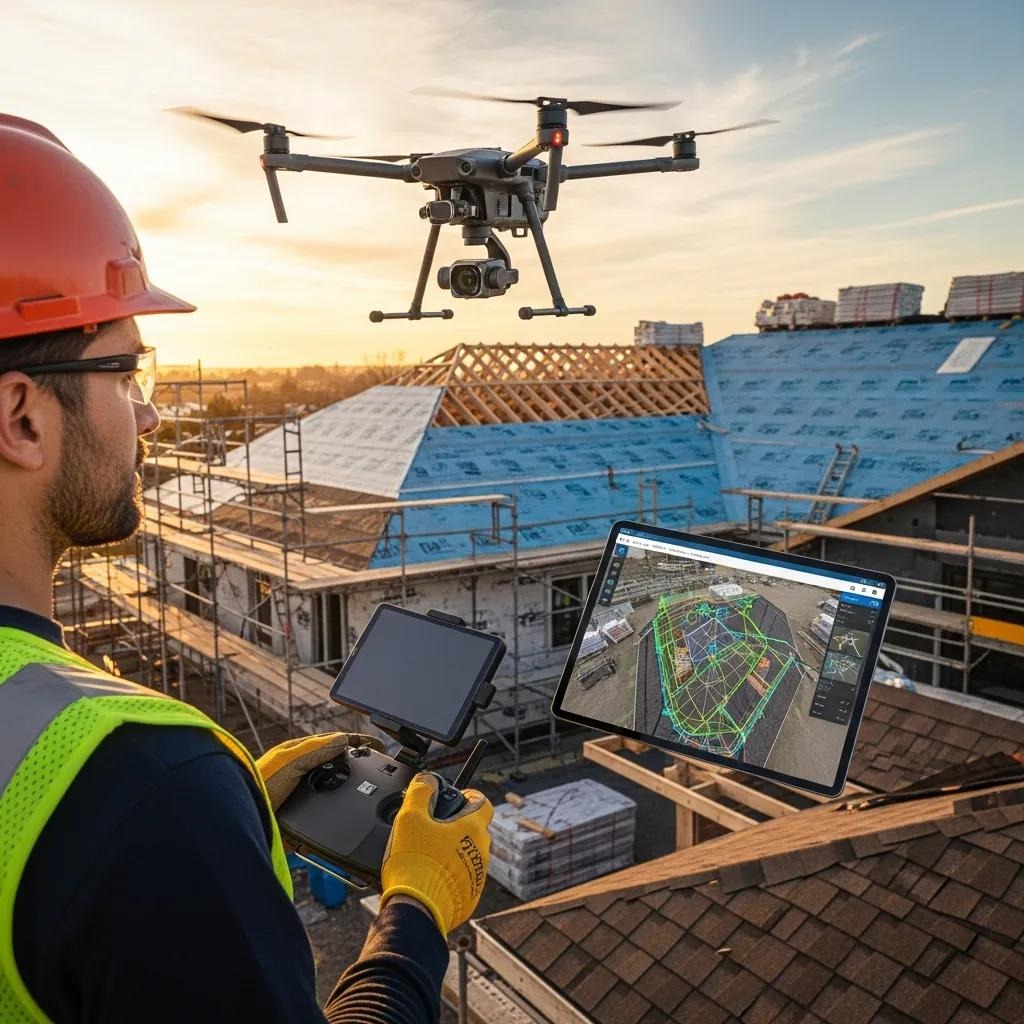
Automation streamlines design, installation and maintenance tasks, increasing throughput and lowering labour costs. By automating repetitive work, contractors can focus on complex tasks, shorten project timelines and raise overall quality.
For businesses looking to leverage these tools, Dream Design Labs specialises in lead generation for roofing companies, connecting them with clients seeking modern solutions. Deploying automation can broaden service offerings and improve customer satisfaction.
Which Roofing Automation Tools Improve Installation and Maintenance?
Common automation tools include drones, 3D modelling software and robotic systems that support surveying, design accuracy and on-site efficiency.
- Drones : Aerial inspections and surveys deliver high-resolution imagery and data, improving accuracy while reducing safety risk.
- 3D modelling software : Precise modelling helps plan installations and catch errors before crews arrive on site.
- Robotic systems : Robots assist with material handling and repetitive tasks, speeding work and improving consistency.
These technologies raise work quality and lower exposure to hazardous conditions for roofing professionals.
What Benefits Do Automation Technologies Offer to Small and Medium Businesses?
Automation provides clear, measurable benefits to small and medium enterprises: lower labour expenses, fewer installation errors and faster project turnaround.
- Cost Savings : Reduced labour needs and fewer mistakes translate into meaningful savings.
- Increased Efficiency : Automated workflows shorten timelines and let teams handle more jobs.
- Scalability : Automation lets businesses grow capacity without a matching rise in labour costs.
Together, these advantages make automation a practical strategy for firms aiming to expand and improve service delivery.
In What Ways Are Drones Transforming Roof Inspection Processes?
Drones offer a faster, safer alternative to manual inspections by covering large areas and capturing detailed imagery without the need for scaffolding or ladders.
How Do Drone Roof Inspections Increase Accuracy and Safety?
Drones capture high-resolution photos and survey data that make defect detection and assessment more accurate. Remote inspections reduce the time crews spend on roofs, lowering accident risk and enabling more frequent, preventive maintenance that extends service life.
What Are the Cost and Time Savings Associated with Drone Technology?
Adding drones to inspection workflows cuts labour hours and inspection times, which lowers operational costs. Faster detection of issues supports timely repairs and avoids more expensive damage down the line.
Why Is Sustainability Central to Emerging Roofing Materials?
Sustainability is a key design priority for new roofing materials. Manufacturers are focusing on options that reduce environmental impact while keeping—or improving—performance.
Evaluating sustainable options requires weighing trade-offs across performance criteria, a task that recent research frameworks help clarify.
Assessing Sustainable Roofing Technologies & Solar Roofs
Policy and industry initiatives increasingly demand quantification of trade-offs among sustainability metrics. Decision-analytical techniques can frame and evaluate alternatives such as reflective, vegetated and solar roofs across multiple performance criteria. Multi-criteria decision analysis supports assessment within the triple-bottom-line framework—economic, societal and environmental impacts—to guide technology selection.
Sustainable roofing technology under multiple constraints: a decision-analytical approach, ZA Collier, 2013
What Sustainable Roofing Materials Are Gaining Industry Adoption?
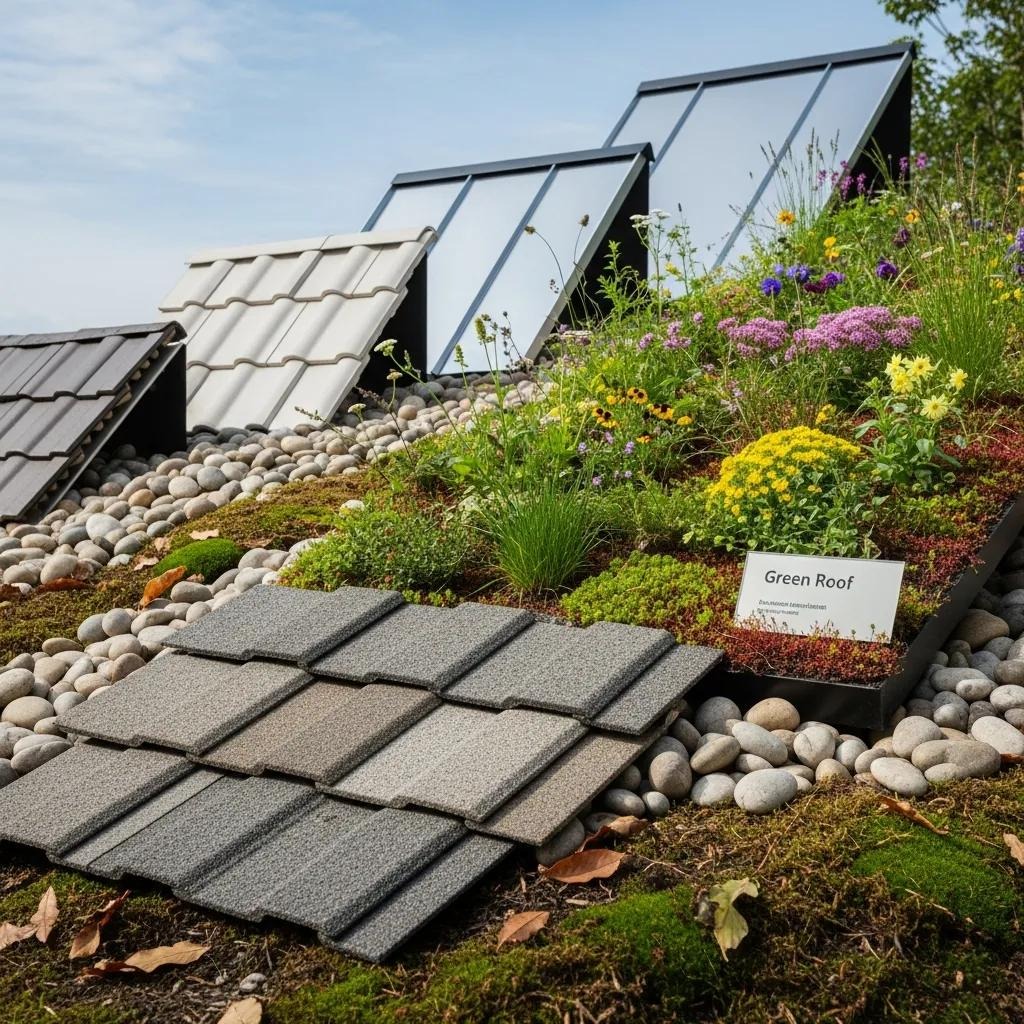
Several sustainable materials are becoming more common, including recycled shingles, vegetated (green) roofs and cool roofing products that reflect sunlight to cut cooling demand.
- Recycled Shingles : Made from post-consumer materials, these reduce landfill waste and give shingles a second life.
- Green Roofs : Vegetated systems add insulation, improve stormwater management and help cool urban areas.
- Cool Roofing Materials : Reflective surfaces lower roof temperatures and reduce energy used for cooling.
Choosing these materials supports environmental targets and can enhance a building’s appearance.
How Do Sustainable Materials Impact Long-Term Roofing Performance?
Sustainable materials can improve durability and energy performance. Cool roofs reduce cooling loads, while green roofs add insulation and manage stormwater. As demand grows, expect continued innovation in materials and installation techniques.
Frequently Asked Questions
What are the main challenges in adopting new roofing technologies?
Common barriers include high upfront costs, the need for specialised training and reluctance from contractors used to traditional methods. Budget limits and uncertainty about ROI slow adoption. Effective responses include targeted education, pilot projects and clear demonstrations of long-term value.
How can homeowners choose the right roofing technology for their needs?
Homeowners should weigh energy performance, durability and environmental impact against local climate and budget. Consult experienced roofing professionals, check warranties and maintenance needs, and compare estimated energy savings to pick a lasting solution.
What role does government regulation play in roofing technology advancements?
Regulations set standards for energy efficiency, safety and environmental performance. Incentives—like solar tax credits—encourage uptake of renewables, and evolving building codes push manufacturers to make more efficient, compliant products.
How do roofing technologies contribute to climate change mitigation?
Roofing technologies lower greenhouse gas emissions by improving energy efficiency and enabling on-site renewable generation. Solar roofing displaces fossil-fuel electricity, and cool materials reduce cooling demand. Broad adoption helps shrink the carbon footprint of the built environment.
What are the future trends in roofing technology?
Look for more automation, deeper sustainability and tighter integration of smart systems. AI and machine learning will refine design and installation, drones will become standard for inspection, and new materials—like self-healing membranes and advanced solar products—will continue to emerge.
How can roofing companies stay competitive in a technology-driven market?
Companies stay competitive by adopting innovation, investing in workforce training and partnering with advanced-material suppliers. Marketing services as energy-efficient and sustainable attracts clients who care about long-term value.
Conclusion
Emerging technologies are changing roofing—improving efficiency, sustainability and safety. Smart systems, solar integration and automation lower costs and support environmental goals. Keeping up with these developments helps stakeholders make strategic choices that benefit projects and the planet.